
How Designer Rugs Are Made
Materials, Craftsmanship and the Techniques Behind Quality Rugs
A well-made rug is far more than a decorative object. It is the result of specialised materials, skilled craftsmanship and carefully developed production techniques.
Understanding how rugs are made helps explain why some rugs feel richer underfoot, why certain designs age beautifully, and why premium rugs, such as those produced by Kvadrat, are respected by architects and designers around the world.
In this guide we explore the key stages of rug production, from raw fibres through to finished textile, and the techniques used to create contemporary designer rugs.
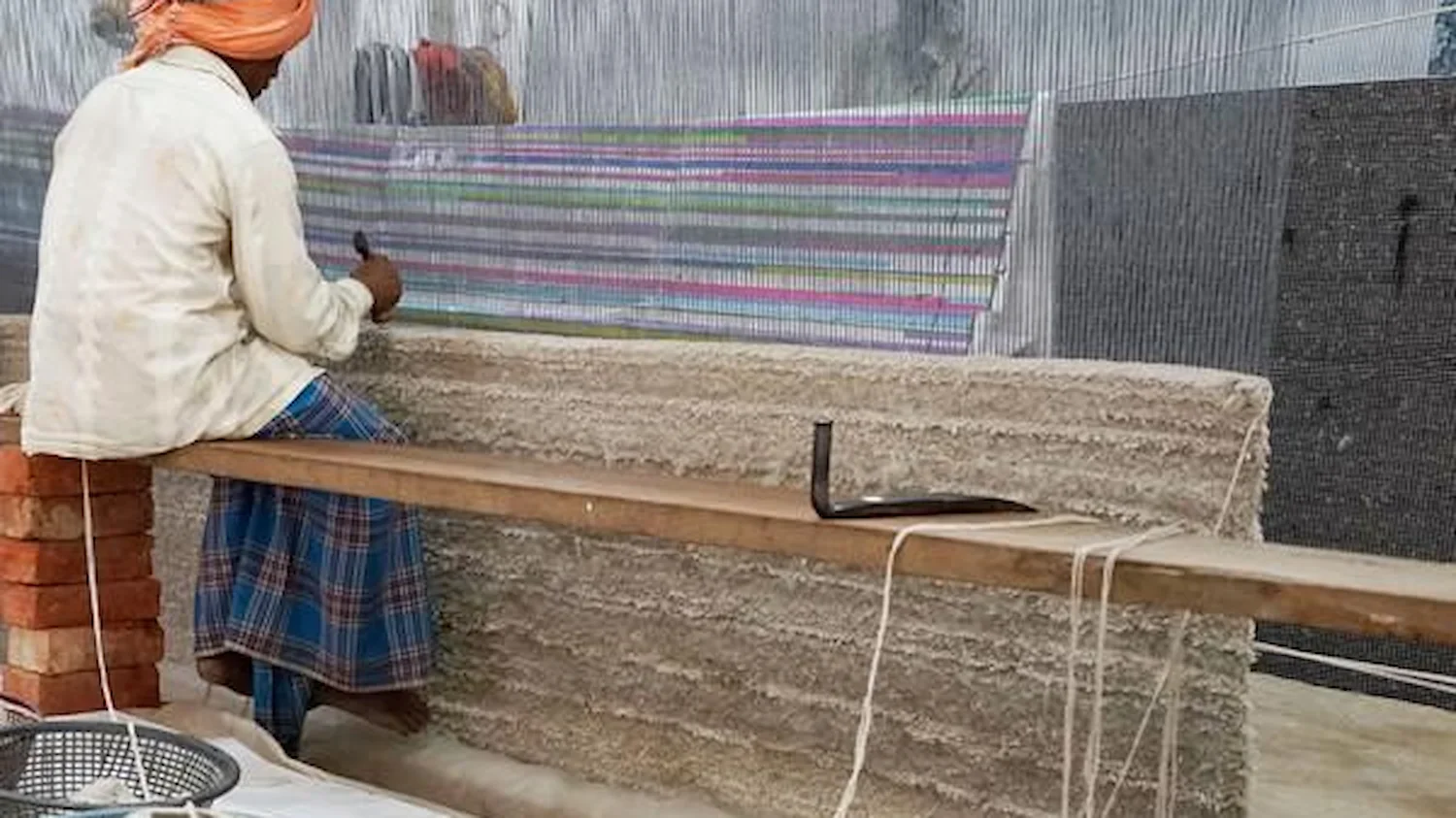
From Fibre to Rug
Most high-quality rugs begin with natural fibres, particularly wool.
Wool is valued in rug making because it combines softness with durability. The fibres naturally resist crushing and recover their shape, making wool particularly suitable for living spaces and high-traffic areas. Many contemporary designer rugs use premium wool sources such as New Zealand wool, prized for its strength and clean colour absorption.
The typical process includes several stages:
Fibre preparation
Spinning the yarn
Dyeing the yarn
Weaving or tufting the rug
Finishing and washing
Each stage influences the final texture, durability and colour depth of the finished rug.
Spinning and Dyeing the Yarn
After wool fibres are cleaned and gently combed to align the fibres, called carding, and then spun into yarn. The twist and thickness of the yarn determine the durability and texture of the rug surface.
Once spun, the yarn is dyed. Modern rug production often uses highly controlled dyeing processes to achieve precise colour consistency, while some traditional rugs rely on natural dyes derived from plants or minerals.
This stage is particularly important for brands like Kvadrat, which are widely recognised for sophisticated colour development and subtle tonal variation.
Common Rug Construction Techniques
Different construction methods create very different rug qualities, affecting everything from texture to durability. In Miko’s Kvadrat rug collection, you’ll see examples of each of these processes.
Collections such as Kvadrat rugs demonstrate how traditional production techniques can be reinterpreted through contemporary materials, texture and design.
Hand-Knotted Rugs
Hand-knotted rugs are among the most labour-intensive textiles produced. Each strand of yarn is individually tied around the rug’s warp threads on a loom, often resulting in thousands of knots per square metre.
Because every knot is tied by hand, these rugs can take months or even years to produce. The result is a rug with exceptional durability and intricate pattern detail.
Hand-knotted rugs are often considered heirloom pieces and can last for decades when properly cared for.
View the hand-knotted Kvadrat Semis rug
Hand-Tufted Rugs
Hand-tufting is a more contemporary production method used in many modern designer rugs.
In this process, yarn is inserted through a fabric backing using a handheld tufting tool or tufting gun. After the yarn is inserted, a backing material is applied and the surface is sheared or carved to achieve the final pile height and texture.
This technique allows for bold designs and sculptural surfaces while remaining more efficient to produce than hand-knotting.
Many contemporary designer rugs including several Kvadrat collections use variations of this technique.
View the tufted Kvadrat July rug.
Flatwoven Rugs
Flatwoven rugs are created by interlacing warp and weft threads on a loom rather than building a pile.
Because they have no raised pile, flatweaves tend to be thinner, lighter and highly durable, making them well suited to dining areas, hallways and layered interiors.
Flatwoven structures also allow designers to explore graphic patterns and strong architectural colour compositions.
View the flatwoven Muuto Ply Rug
Finishing the Rug
Once weaving or tufting is complete, the rug undergoes a series of finishing steps.
These typically include:
trimming the pile to an even height
washing the rug to remove residues and soften fibres
securing edges and borders
inspecting the rug for consistency
This finishing process gives the rug its final appearance and ensures the construction is stable and durable.
The Role of Designers
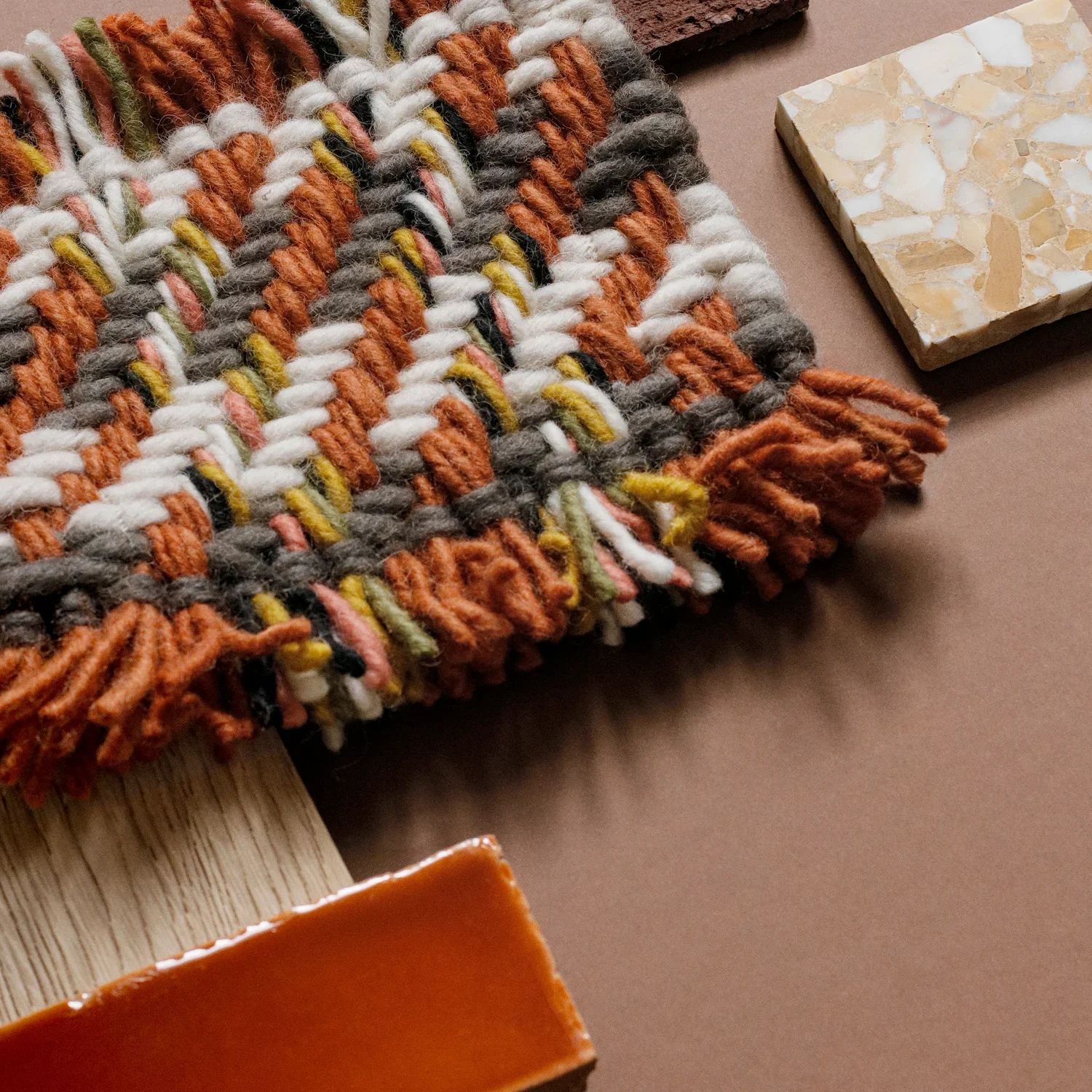
Many contemporary rug collections are developed through collaborations between textile specialists and designers.
Danish textile company Kvadrat, founded in 1968, is known for working closely with architects, artists and designers to develop innovative textiles and rugs.
These collaborations often explore new weaving techniques, colour systems and textures resulting in rugs that function as both practical interior elements and design objects.
Craft, Time and Material Quality
The process of making a rug, from preparing fibres to finishing the pile, requires considerable time and expertise.
While modern manufacturing has introduced new efficiencies, the best rugs still rely heavily on skilled craftsmanship and carefully selected materials. The result is a textile that not only defines a space visually but also improves with age and use.
Exploring Designer Rugs
If you are considering a rug for your home, understanding how it is made can help you choose the right construction and material for your space.
If you're selecting a rug for a living room or dining space, our guide on how to choose the right rug explains sizing, materials and placement in more detail.
You can explore our full collection here:
Each rug offers a different combination of texture, construction and design — all contributing to the atmosphere and comfort of a room.