
How to Choose Pendant Lighting for Your Home
Pendant lighting can do much more than simply illuminate a room. Positioned correctly, a pendant can define a dining area, provide practical light over a kitchen island or become a focal point within a living space.
With such a wide range of sizes, materials and lighting effects available, choosing the right pendant is often less about finding a design you like and more about understanding what the light needs to do within the space.
Start with how you want to use the light
Before considering size or finish, think about the purpose of the pendant.
A pendant above a kitchen island may need to provide useful task lighting onto the benchtop. Above a dining table, softer and more atmospheric light is often preferable. In an entrance, stairwell or living room, the pendant may primarily be decorative.
Some designs direct most of their light downwards, while others diffuse light throughout the room. Glass, fabric and translucent materials can produce a softer ambient glow, while metal shades and more directional fittings generally create a concentrated pool of light.
Understanding this difference makes it much easier to narrow down the right designer pendant lighting for a particular room.
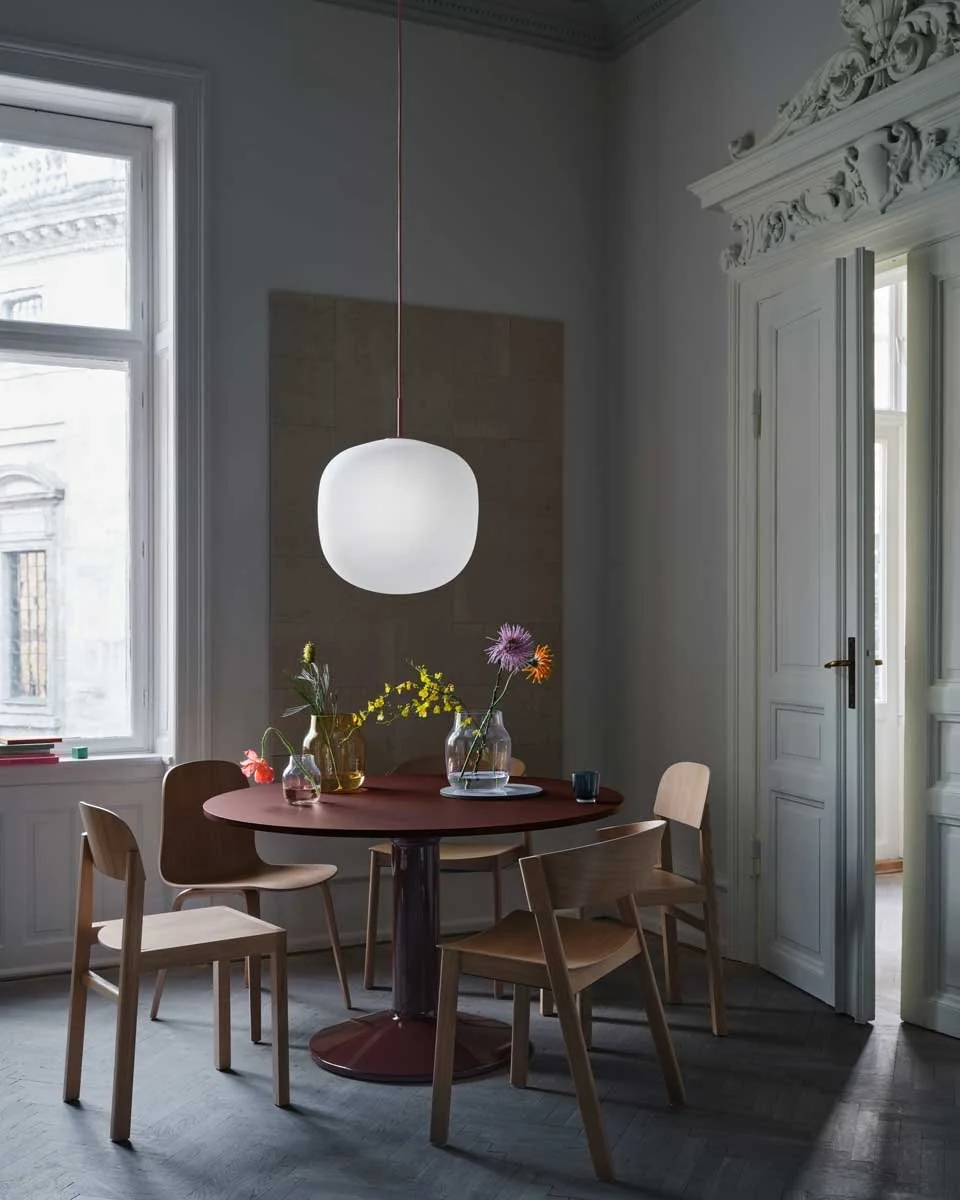
Choosing pendant lights for a dining table
A pendant above a dining table helps visually anchor the table within the room.
As a general principle, the pendant should relate to the proportions of the table rather than the room itself. A small pendant can become lost above a large table, while an oversized fitting can overwhelm a more compact setting.
For rectangular dining tables, consider a long linear pendant or a series of smaller pendants. Round tables often work particularly well with a single central pendant or clustered arrangement.
The bottom of a dining pendant will commonly sit around 700–900 mm above the tabletop, although the ideal height depends on the fitting, ceiling height and sightlines through the room.
The aim is to bring the light low enough to create intimacy without obstructing conversation or views across the table.
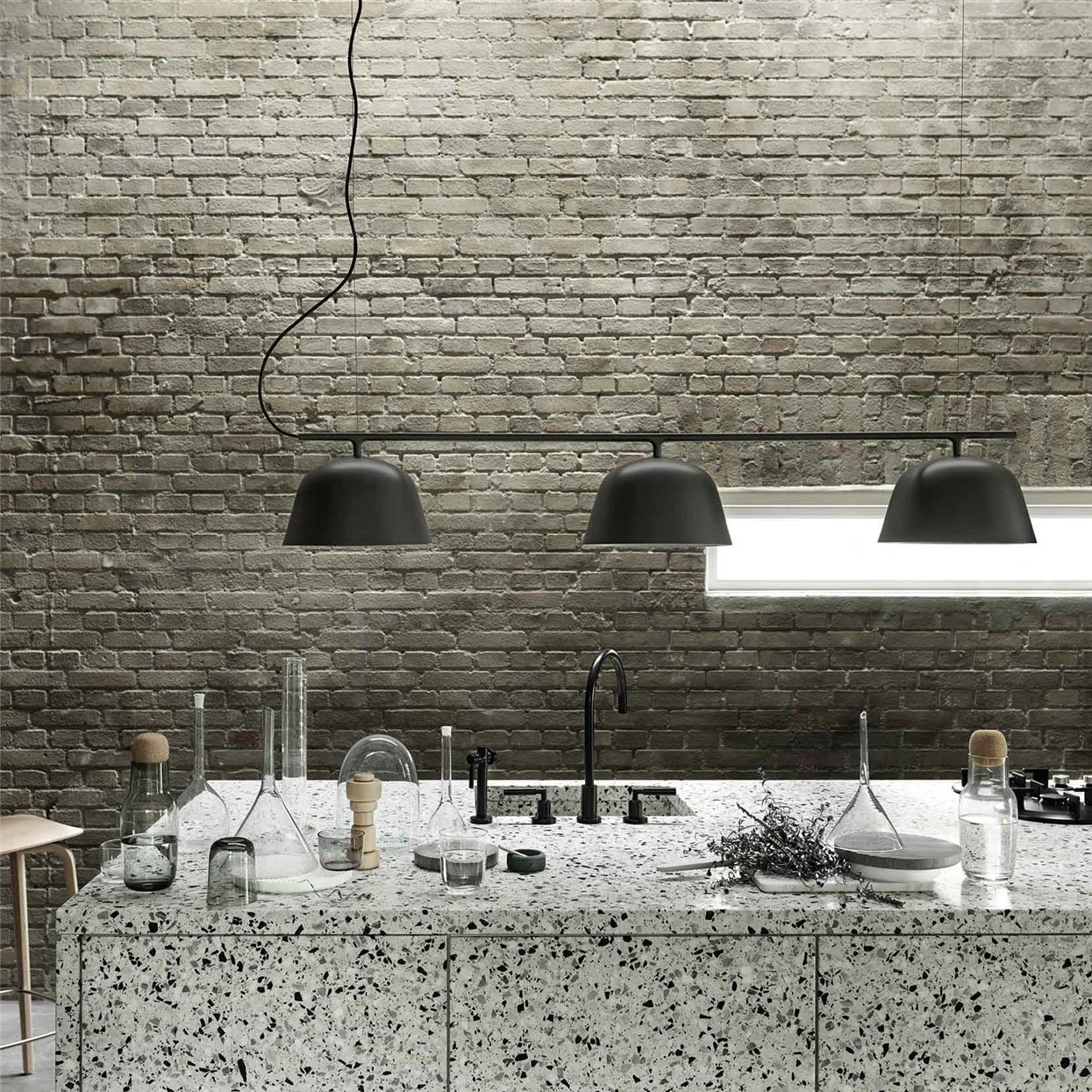
Pendant lighting over a kitchen island
Kitchen island lighting needs to balance appearance with practicality.
For a long island, this might mean a linear pendant light running along the bench or two or three smaller pendants spaced evenly above it.
Rather than selecting the number of pendants first, consider the overall composition. Three small fittings are not automatically better than two larger ones, and a single well-proportioned linear pendant can often create a cleaner result.
Also consider where the light actually falls. Decorative pendants with very diffuse or low-output light may look beautiful but might need to be supplemented by architectural lighting if the island is an important food preparation area.
How big should a pendant light be?
Scale is one of the most important considerations when choosing pendant lighting.
Product dimensions can sometimes appear surprisingly large on paper, particularly when viewing lighting online. In a furnished room, however, a pendant needs enough visual presence to relate to surrounding furniture and architecture.
Consider the pendant in relation to:
the width and length of the table or island below it
ceiling height
the overall dimensions of the room
surrounding furniture
whether the fitting is visually solid or transparent
whether it will be viewed from adjoining spaces.
A large lightweight fabric or glass pendant can feel considerably less imposing than a smaller solid metal fitting.
When uncertain, marking out the dimensions with tape, cardboard or even a temporary paper template can make scale much easier to judge.
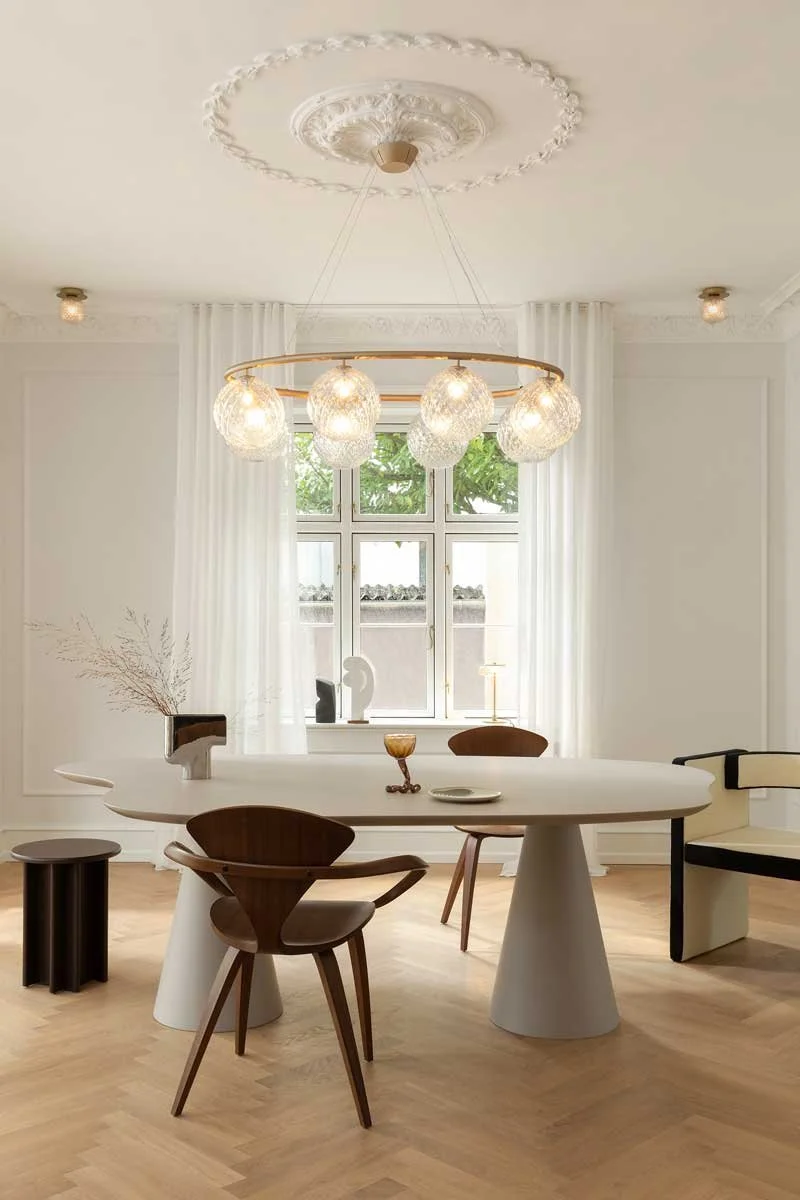
Consider hanging height as part of the design
Pendant height has a significant effect on how a fitting looks and performs.
Over tables and benches, pendants can generally be positioned relatively low because people don't need to walk beneath them. In circulation areas, sufficient clearance becomes essential.
High ceilings also don't necessarily mean a pendant needs to remain close to the ceiling. Longer suspension cables can bring the light down into the occupied part of the room and help connect a tall architectural space with the furniture below.
Many designer pendants are available with extended cable lengths for this reason.
Warm or cool light?
For most residential interiors, we generally prefer warm light.
A colour temperature around 2700K produces a warm, comfortable light that works particularly well with timber, natural stone, textiles and warmer interior finishes.
Some contemporary interiors may suit 3000K, particularly where the surrounding architectural lighting uses the same colour temperature.
Consistency is important. Mixing noticeably different colour temperatures within the same room can make an otherwise carefully considered lighting scheme feel disjointed.
Pay attention to glare
Brightness alone doesn't determine whether a pendant provides good light.
A poorly shielded light source can create uncomfortable glare, particularly when positioned close to eye level above a dining table or island.
Look at how the light source is concealed or diffused. Deep shades, opal glass, fabric diffusers and carefully designed optics can all reduce direct glare while still providing useful illumination.
This is particularly important in open-plan spaces where the pendant may be visible from several different seating positions.
Materials and finishes
Pendant lighting introduces another material into the interior, so consider how it relates to the finishes already present.
Brass and bronze can introduce warmth. Aluminium and steel can provide a more architectural appearance. Glass can reduce visual weight, while ceramic, timber and fabric introduce texture and softness.
The finish doesn't necessarily need to match other fittings in the room. Often a more interesting result comes from selecting materials that complement one another rather than attempting to make every metal finish identical.
Australian and European pendant lighting
Australia has an increasingly strong lighting design and manufacturing industry alongside established European lighting brands.
Australian-made pendant lighting can offer advantages including shorter lead times, local support and the ability to specify particular finishes or configurations. European manufacturers bring their own traditions of industrial design, material experimentation and lighting technology.
Rather than choosing based purely on origin, we recommend considering the quality of the light, construction, repairability and whether the design will continue to work within the interior over the long term.
Our designer pendant lighting collection brings together Australian and European designs selected with these considerations in mind.
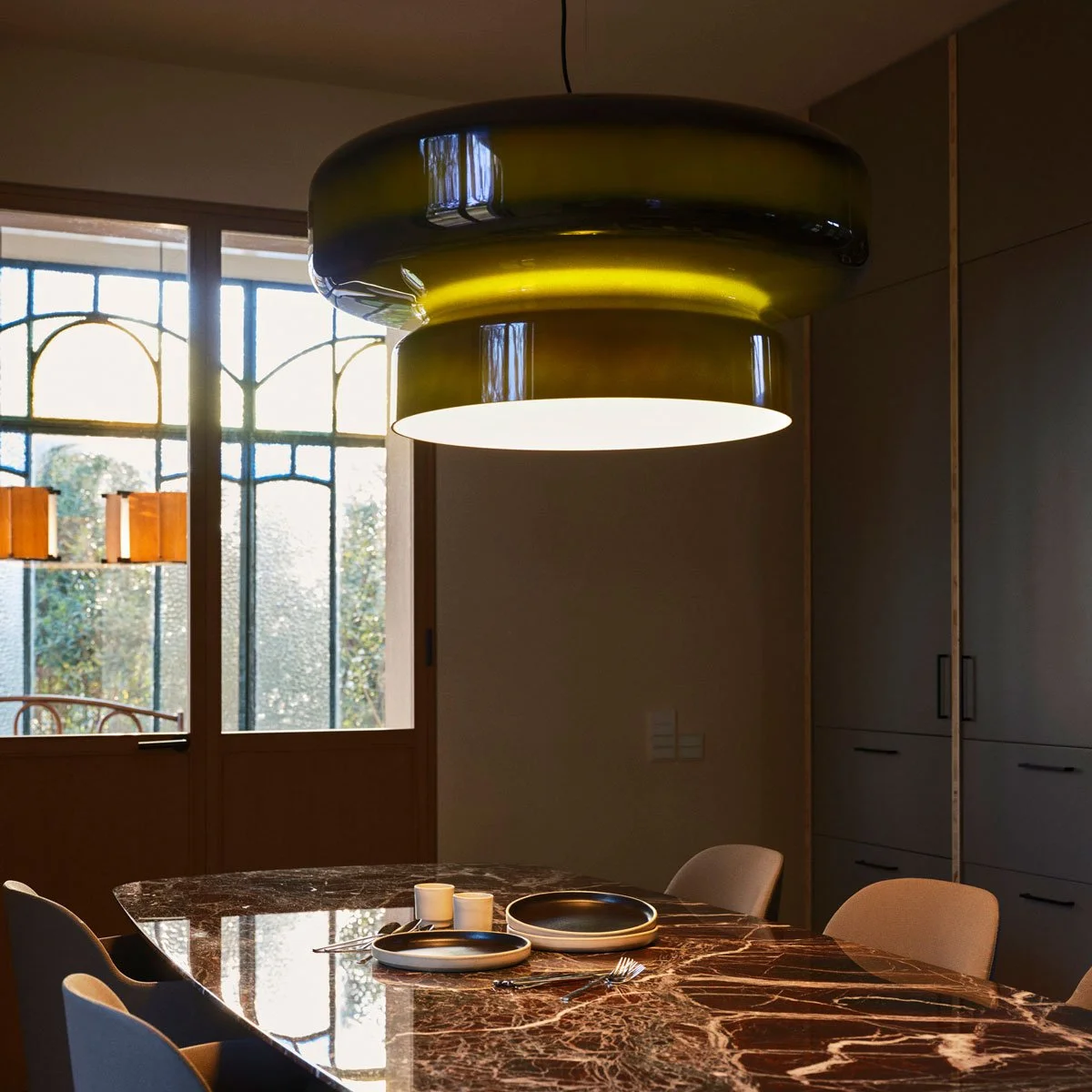
Don't choose the pendant in isolation
One of the most common mistakes is treating the decorative pendant as responsible for lighting the entire room.
Good residential lighting usually comes from layers.
A pendant might provide atmosphere and light over a dining table while downlights, wall lights or lamps provide additional ambient and task lighting elsewhere.
Thinking about these sources together generally produces a much more comfortable interior than simply increasing the brightness of a single pendant.
Explore designer pendant lighting
Miko Designs offers a curated collection of designer pendant lighting for residential, hospitality and commercial interiors, including Australian and European designs for dining areas, kitchens and living spaces.
Explore our designer pendant lighting collection to compare different sizes, materials and lighting effects, or visit our Canberra showroom for assistance selecting lighting for your space.
For larger residential or commercial projects, we can also assist with product selection, specifications and lighting solutions across multiple areas of a project.