
How to Choose Architectural Downlights
Downlights are one of the most common forms of architectural lighting, but choosing the right fitting involves more than deciding how many to install in a ceiling.
Beam angle, glare, colour temperature, colour rendering, adjustability and placement all affect how a space feels and functions.
A considered lighting plan uses downlights to illuminate surfaces, objects and task areas — rather than simply creating an evenly spaced grid across the ceiling.
What makes an architectural downlight different?
Architectural downlights are designed to provide greater control over how light is distributed within a space.
Depending on the fitting, this can include different beam angles, adjustable optics, deeper-set light sources to reduce glare, high colour rendering and a choice of colour temperatures.
The result is greater control over where light falls and how the fitting itself appears within the ceiling.
This can be particularly important in homes, hospitality venues, retail spaces and commercial interiors where lighting forms part of the overall architectural design.
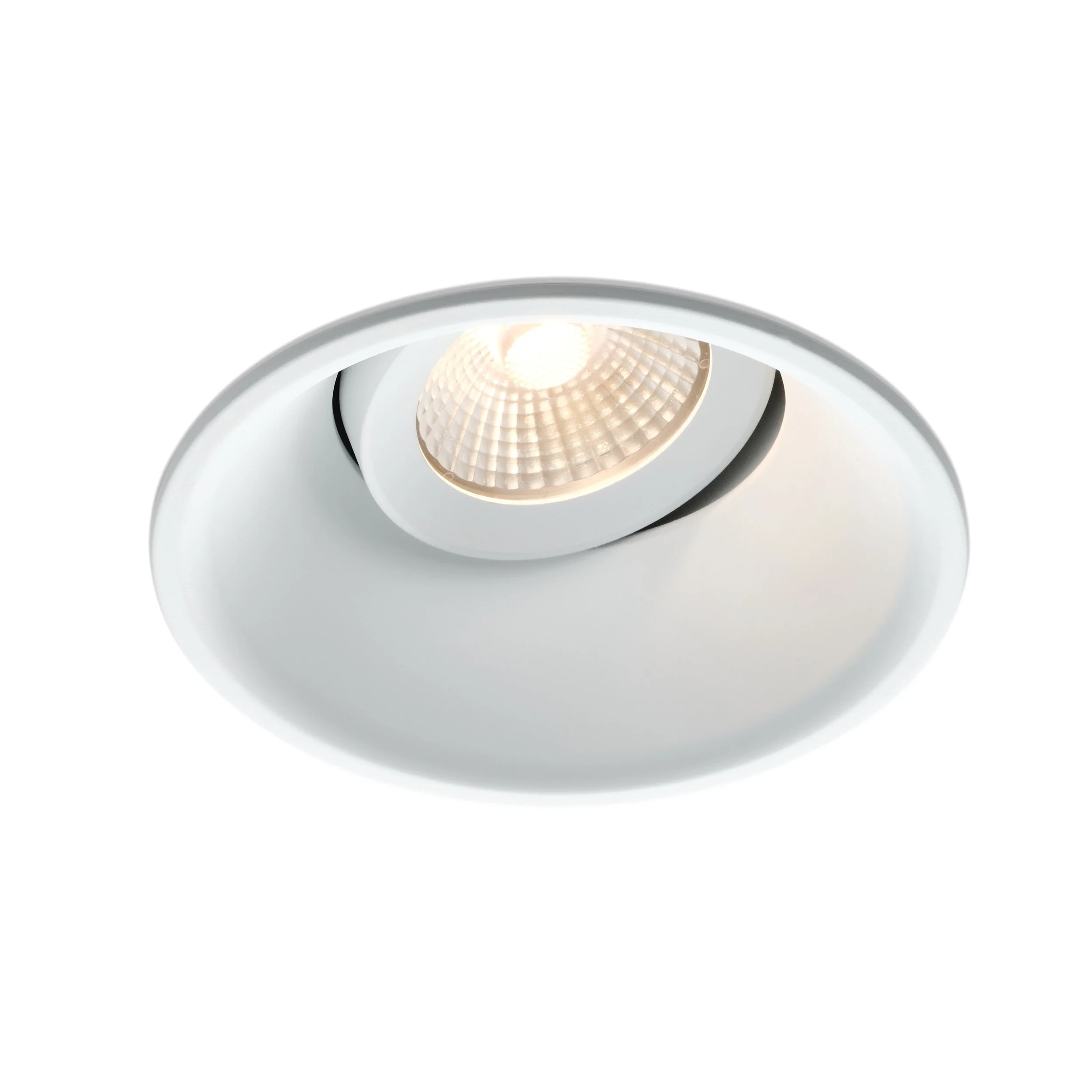
Fixed or adjustable downlights?
Fixed downlights direct light straight down and are useful where consistent general or task lighting is required.
Adjustable downlights and spotlights allow the light to be aimed towards a particular surface or object.
This makes them particularly useful for illuminating artwork, joinery, shelving, textured walls or architectural details.
Many lighting plans use a combination of both.
Fixed fittings may provide general illumination through functional areas, while adjustable fittings introduce more focused light where required.
Understanding beam angle
Beam angle describes how widely a fitting spreads its light.
A narrow beam creates a more concentrated pool of light, while a wider beam distributes light across a larger area.
Narrow beams can be useful for highlighting artwork, objects or architectural features. Wider beams are generally better suited to broader illumination.
The right beam angle depends on the distance between the fitting and the surface being illuminated, the ceiling height and the effect you want to create.
There is no single beam angle that is correct for every project.
The important question is not simply how bright the fitting is, but where you want that light to go.
What is CRI?
CRI stands for Colour Rendering Index and describes how accurately a light source reveals colour.
A high-CRI light source allows materials, finishes and colours to appear more natural under artificial light.
This is particularly important in interiors where materials such as timber, stone, fabrics, artwork and coloured surfaces form an important part of the design.
For residential, hospitality and retail environments, good colour rendering can make a noticeable difference to how the entire interior appears.
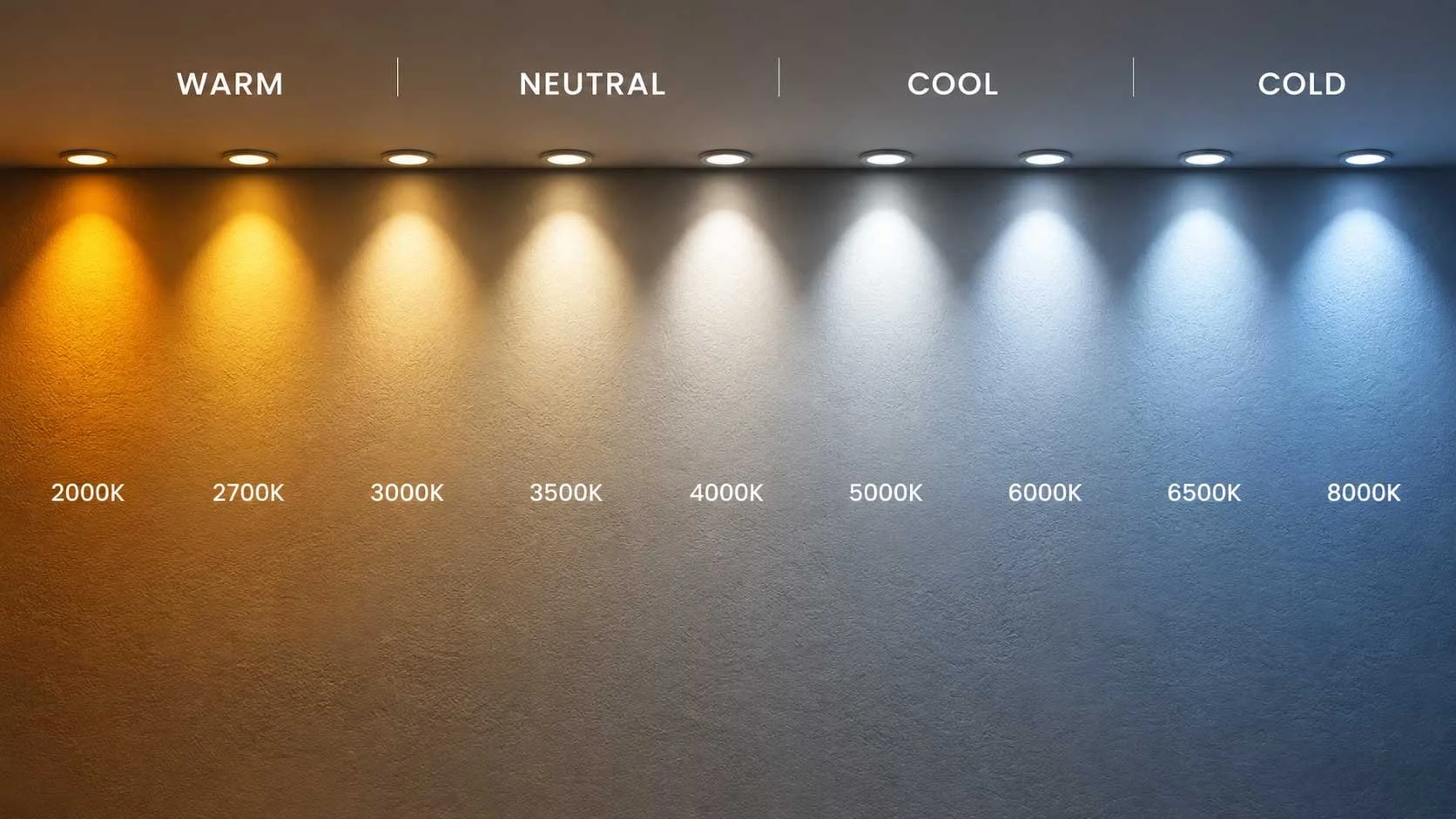
Choosing between 2700K, 3000K and 4000K
Colour temperature describes whether a light appears warmer or cooler.
2700K produces a warm light often associated with residential interiors, bedrooms, living areas and hospitality spaces.
3000K remains warm but has a slightly cleaner appearance. It is widely used across contemporary residential and commercial interiors.
4000K produces a cooler, more neutral light and may be appropriate for workplaces, task-oriented environments and some commercial applications.
There is no universally correct choice.
The architecture, materials, natural light and intended atmosphere of the space should all be considered.
Consistency is also important. Mixing different colour temperatures throughout adjoining areas without a clear reason can make a lighting scheme feel disjointed.
What does low glare mean?
Glare occurs when a bright light source is directly visible and uncomfortable to look at.
A well-designed architectural downlight can reduce glare by positioning the light source deeper within the fitting or by using optics and shielding to control the light.
This is particularly valuable in living areas, restaurants, hotels and other spaces where comfort and atmosphere are important.
A fitting can produce plenty of useful light without the light source itself becoming visually dominant.
Don't just create a grid of downlights
One of the most common approaches to lighting a room is to create an evenly spaced grid of downlights across the ceiling.
It is simple, but it rarely produces the most interesting result.
Instead, think about what actually needs to be illuminated.
Where is the artwork?
Where will people sit?
Which surfaces have interesting texture?
Where are the kitchen work areas?
Is there joinery worth highlighting?
Could a wall be illuminated rather than simply lighting the floor in front of it?
Starting with these questions usually produces a more considered lighting plan.
Use downlights to light surfaces, not just floors
Light becomes visible when it reaches a surface.
Directing light towards a wall, artwork, curtain, piece of furniture or architectural feature can therefore make a room feel brighter and more layered than simply directing every fitting onto the floor.
Adjustable architectural downlights are particularly useful for this.
They allow the light to be aimed precisely and can create contrast between brighter and darker areas of a room.
This contrast helps give an interior depth and atmosphere.
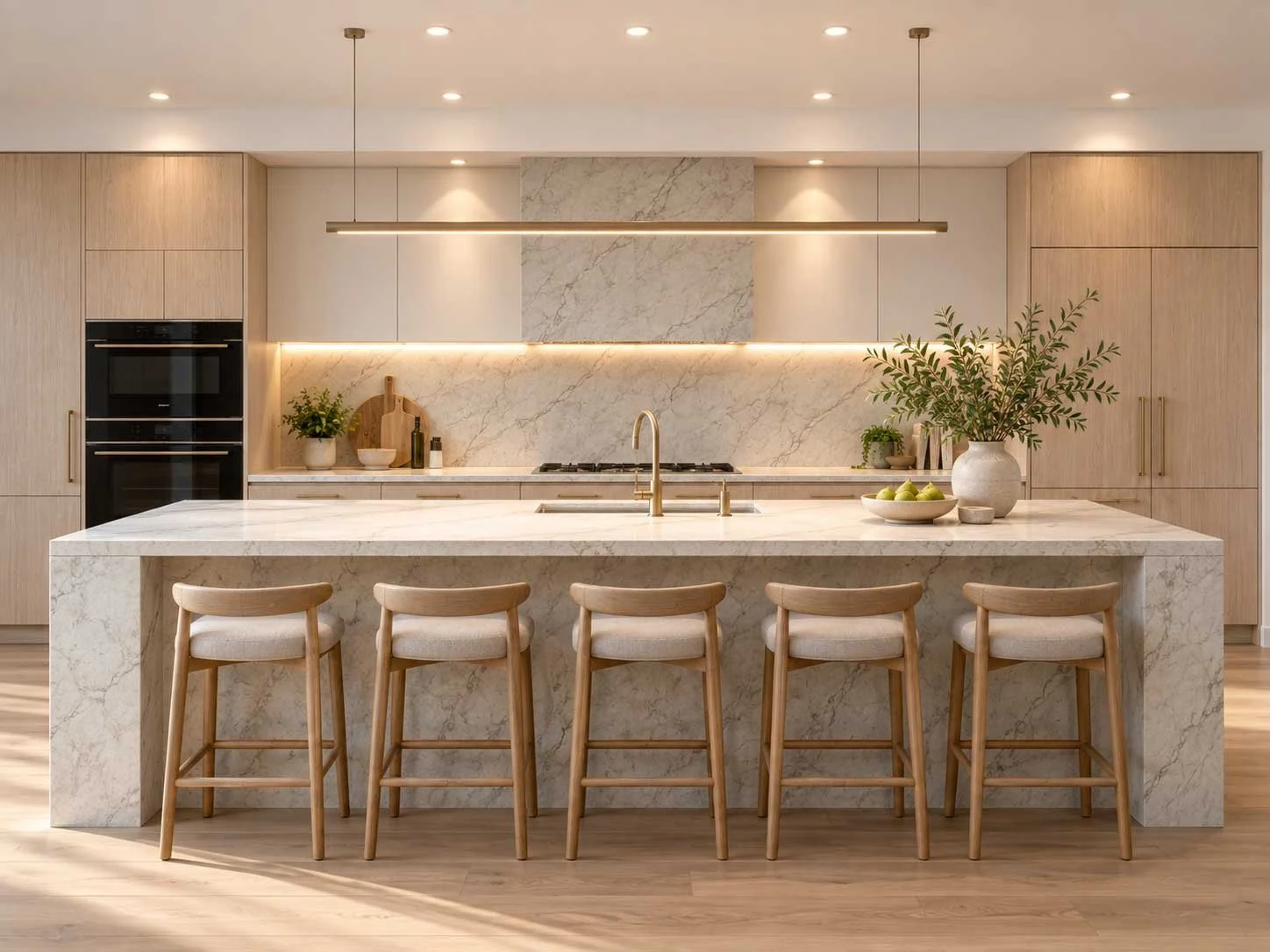
Downlights in kitchens
Kitchen lighting needs to be functional, but it does not have to feel clinical.
Rather than placing fittings purely according to a ceiling grid, consider where food preparation will take place and where useful light is actually needed.
Benchtops, islands and work areas should be properly illuminated without people casting unnecessary shadows over the surfaces they are using.
Pendant lighting can then be layered with architectural downlights to provide softer or more decorative lighting over an island or dining area.
Downlights in living areas
Living spaces usually benefit from a softer and more layered approach.
Architectural downlights can be used selectively to illuminate artwork, shelving, tables, curtains and architectural surfaces.
Floor lamps, table lamps and wall lights can then provide additional ambient light at a lower level.
This gives the room different lighting settings rather than relying on one group of ceiling lights for every situation.
Architectural downlights for commercial projects
Commercial, hospitality and retail lighting can place greater demands on a fitting.
Lighting may operate for longer periods and needs to provide consistent output while meeting the visual requirements of the project.
Restaurants and hospitality spaces may prioritise low glare and warm colour temperatures, while retail environments often benefit from excellent colour rendering and flexible adjustable fittings.
Workplaces may require a combination of task lighting, ambient lighting and accent lighting across different areas.
Specification-grade architectural lighting offers designers greater control over these variables.
Dimming and lighting control
Dimming gives a space significantly more flexibility.
A lighting level that works during the day may feel far too bright in the evening.
Being able to reduce the output allows architectural lighting to perform both functional and atmospheric roles.
In larger projects, different groups of lights can also be controlled independently so that the lighting changes according to how the space is being used.
Choosing the right architectural downlight
When comparing architectural downlights, consider more than the appearance of the fitting.
Look at:
Beam angle
Colour temperature
Colour rendering
Fixed or adjustable optics
Glare control
Dimming compatibility
IP rating where required
Finish and trim detail
The intended application
The best choice will depend on both the technical requirements of the project and the visual effect you are trying to achieve.
Explore architectural lighting at Miko Designs
Miko Designs offers architectural lighting for residential, hospitality and commercial projects across Australia.
Our collection includes Australian-made architectural lighting from ARX which includes uplights, step lights, bollards, alongside Miko’s own range of downlights and wall lights.
We can also assist architects, interior designers, builders and homeowners with product selection and lighting specifications from our Canberra showroom.